

Established in Hargeisa · 1 February 2026
From close to the region it studies
RSRPI exists so that the Red Sea, Bab el-Mandeb and the Horn of Africa are understood, analysed and represented by those closest to the realities on the ground.
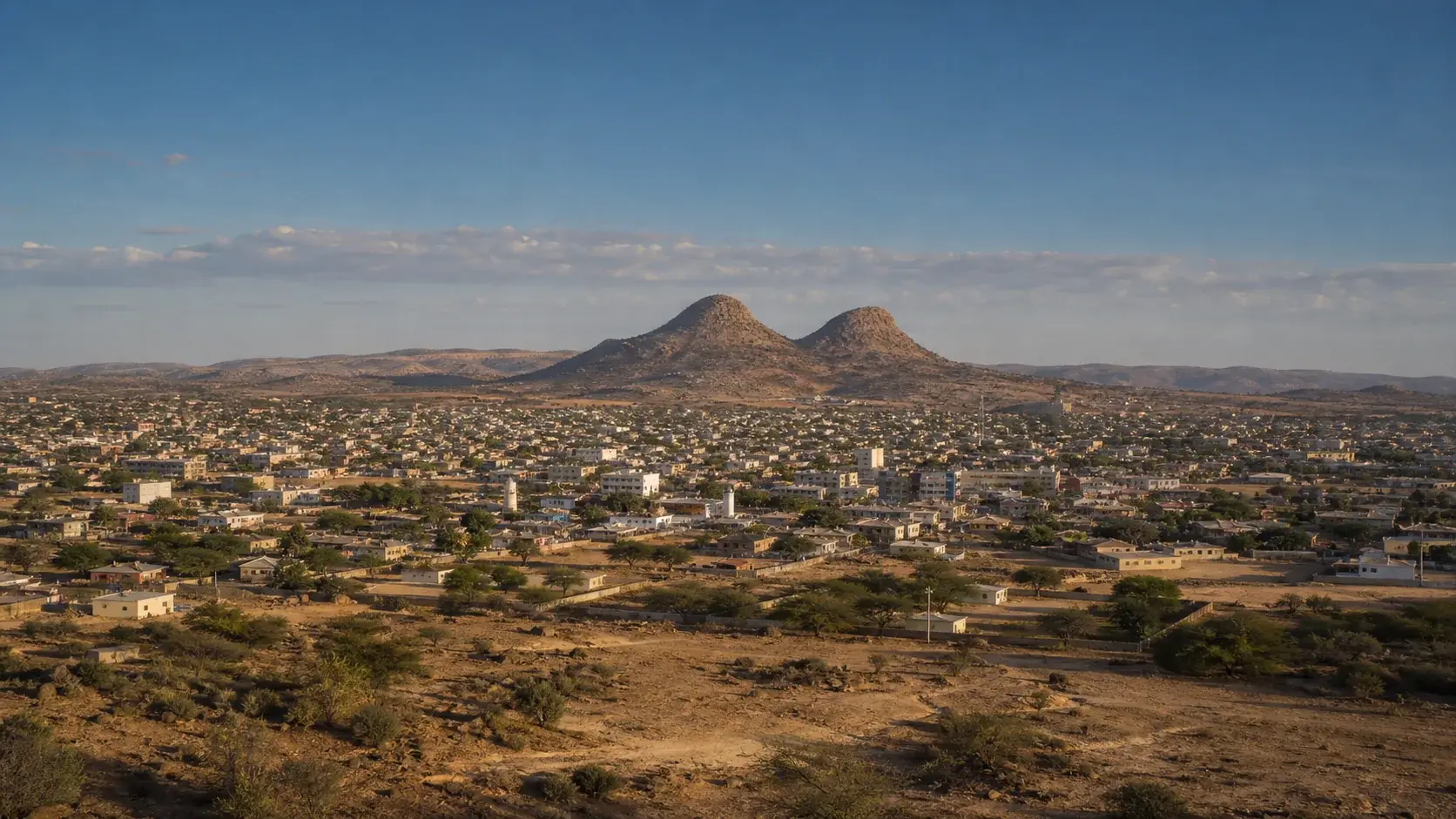
09°33′N 44°04′E · HARGEISA
01Founding statement
Why the Institute exists
The Red Sea Research and Policy Institute (RSRPI) is established as an independent, non-partisan think tank dedicated to providing evidence-based research, policy analysis and strategic insights for the Red Sea, Bab el-Mandeb and Horn of Africa region.
Recognising the strategic importance of this maritime corridor and its surrounding states, RSRPI seeks to advance knowledge, inform policy, and support sustainable security and economic development in the region.
The mandate is deliberately narrow. The Institute does not cover the whole of Africa or the whole of the Middle East. It covers one corridor and the states around it, in enough depth to be useful to the people who make decisions about it.
02Purpose
What the Institute was founded to do
- 01
Accurate, timely research
On geopolitical, security, economic and environmental developments in the Red Sea and the Horn of Africa, produced to a standard that stands up to scrutiny.
- 02
Policy guidance and strategic advice
For governments, regional organisations, international partners and the private sector, delivered in a form a decision-maker can act on.
- 03
Regional capacity building
Strengthening research institutions and scholars across the region, promoting locally informed policy solutions rather than imported ones.
- 04
Bridging local and global
Carrying the region’s own interests into international policy debates, so it takes part in them and is not only a subject of them.
03Our vision
A secure, stable and prosperous Red Sea region, guided by evidence-based research, strategic foresight and informed policy decisions.
04Our mission
What we do about it
To provide high-quality research, policy analysis and strategic insights that inform governments, regional institutions, international partners and private stakeholders on security, governance, trade and development in the Red Sea and Horn of Africa.
- Produce timely, evidence-based research on regional geopolitics, security, maritime trade and governance.
- Offer policy guidance and strategic recommendations at local, regional and international levels.
- Strengthen research and policy capacity through training, collaboration and knowledge-sharing.
- Serve as a trusted source of analysis bridging local realities and global policy debates.
- Promote sustainable development, security and regional integration through actionable insight.
05Core values
What the work is held to
These govern how the Institute works, not merely what it believes.
Independence
Free from political, ideological or commercial bias.
Integrity
Upholding honesty, ethics and transparency in all research and engagements.
Excellence
Research that is rigorous, evidence-based and usable by the people it is written for.
Regional ownership
Prioritising solutions grounded in local realities and knowledge.
Collaboration
Engaging governments, multilateral institutions, academia and civil society to achieve impact.
Impact-oriented
Recommendations a reader can act on, written for the decision in front of them.
Innovation and foresight
Using strategic foresight, scenario planning and data-driven insight to anticipate future challenges.
Independence governs the rest: research that is not independent cannot be rigorous, cannot be trusted by the parties it addresses, and cannot represent the region rather than an interest within it.
06Method
How the work is done
The Institute publishes analysis, not opinion. These are the working methods behind every publication it issues.
Open-source intelligence
Every finding traces back to material a reader can go and check. Sources are collected systematically and cited, so the argument can be tested by the people it argues with.
Strategic foresight
Scenario planning across security, economic and political developments. Each scenario carries the conditions that would bring it about, so a reader knows what to watch for.
Risk mapping
Where is the exposure, and to what? Risk is located geographically and by sector, and that mapping feeds straight into the early-warning products.
Monitoring and early warning
The corridor is watched continuously. An alert goes out when a situation actually changes, so timing follows events and not the publishing calendar.
Regional collaboration
The work is done with regional institutions and scholars, and the training that goes with it stays where the research happens.
Decision support
Outputs built for the decisions they inform: dashboards and briefings for those acting, reports and briefs for those deliberating.
07The region
The corridor we study
One connected system: the sea, the strait at its mouth, and the states around both.
 Dust over the Red Sea · NASA MODIS · public domain
STYLISED · NOT FOR NAVIGATION · NO POLITICAL BOUNDARIES DEPICTED